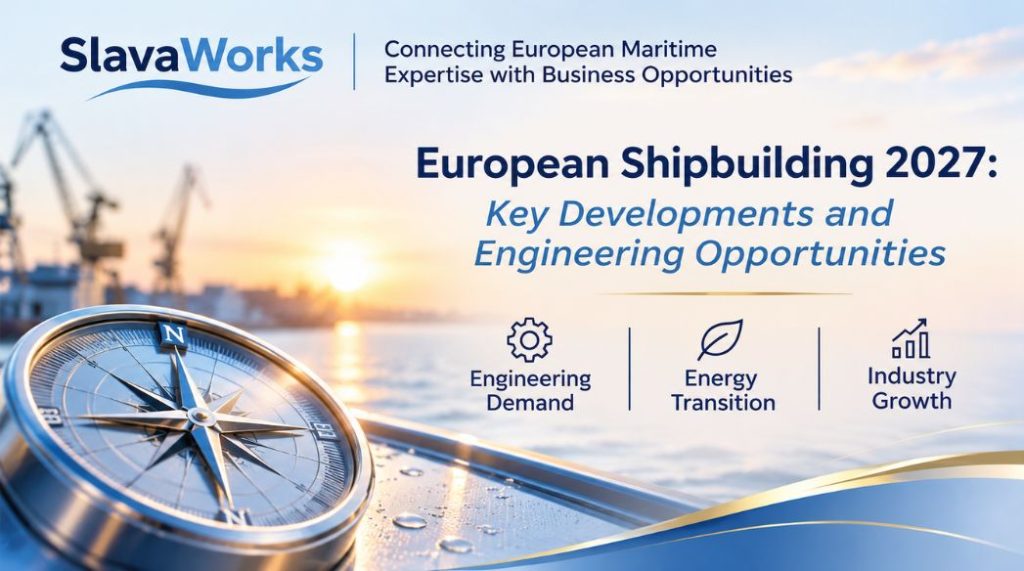
European Shipbuilding 2027: Skills & Trends
The Decisions of 2026 Shaping Tomorrow’s Engineering Careers
The future of European shipbuilding is taking shape today
The European maritime industry is entering an important period of technological and industrial development.
Energy efficiency, electrification, digitalisation and international cooperation are influencing how vessels are designed, built, modernised and operated.
For shipyards and engineering companies, these developments create new opportunities to strengthen their technical capabilities.
For engineers, they provide valuable guidance on which professional skills may become increasingly relevant.
Several important developments in 2026 help us understand where the European maritime industry is heading.
1. Europe is strengthening its maritime industrial capabilities
On 4 March 2026, the European Commission adopted its new Industrial Maritime Strategy.
The strategy aims to strengthen European shipbuilding, maritime manufacturing, technological innovation and industrial competitiveness.
It also highlights the importance of technical education, professional development and the availability of skilled workers.
On 2 September 2026, the European Commission launched the EU Industrial Maritime Value Chains Alliance.
This initiative aims to strengthen cooperation between maritime manufacturers, shipyards, technology providers and other industry stakeholders.
What does this mean for employers?
Companies have an opportunity to review their long-term engineering capabilities, identify specialist skills and explore cooperation across European markets.
What does this mean for engineers?
Professionals with proven experience in shipbuilding, maritime systems, technical design and engineering integration have an opportunity to align their expertise with evolving industrial priorities.
2. Energy transition is becoming an engineering challenge
European maritime regulations are encouraging more efficient energy use and lower greenhouse gas emissions.
FuelEU Maritime has applied since January 2025, while the maritime EU Emissions Trading System continues its phased implementation.
From 2030, certain passenger and container ships will be required to use onshore power supply or qualifying zero-emission alternatives at relevant EU ports, subject to the applicable regulatory conditions.
These developments create engineering considerations extending beyond fuel selection.
Electrical distribution, power management, energy efficiency, equipment integration and vessel modernisation all play an important role.
For employers, this means considering the technical expertise required across the entire project lifecycle.
For engineering professionals, it means understanding how their existing knowledge can contribute to increasingly complex maritime energy systems.
3. Technical flexibility is becoming increasingly valuable
DNV’s Maritime Forecast to 2050, published in August 2026, highlights the importance of developing fleet strategies that remain effective under different regulatory, technological and market scenarios.
Shipowners and shipbuilders must make investment decisions today while considering how requirements may evolve over the coming decades.
This makes adaptability an important engineering principle.
Depending on the vessel type and project, relevant solutions may include:
- Hybrid and electric propulsion systems.
- Advanced power management.
- Energy-efficient vessel design.
- Integrated automation and monitoring.
- Modular technical systems.
- Modernisation of existing vessels.
There is no universal technical solution for every vessel.
Successful decisions depend on operational requirements, available infrastructure, engineering feasibility and long-term commercial considerations.
4. Which engineering competencies deserve attention?
For maritime employers, future workforce planning should begin with the technical requirements of upcoming projects.
Several professional areas deserve particular attention.
Marine Electrical Engineering
Design and integration of vessel electrical systems, power distribution and electrical equipment.
Automation and System Integration
Integration of control systems, PLC technologies, monitoring solutions and shipboard automation.
Naval Architecture and Structural Engineering
Vessel design, structural calculations, stability and adaptation to new equipment or operational requirements.
Commissioning and Technical Project Engineering
Testing, installation coordination, system verification and technical delivery.
Engineering Software and Digital Design
Practical knowledge of tools such as EPLAN, CAD and relevant simulation or engineering platforms.
These are not guaranteed forecasts of recruitment volumes. They represent technical capabilities closely connected to the industry’s current development priorities.
5. What can employers do today?
Preparing for future engineering needs does not necessarily mean expanding teams immediately.
It begins with understanding which capabilities are already available and which may be required for upcoming projects.
A practical starting point is to:
- Review the technical requirements of planned vessel projects and modernisation programmes.
- Identify specialist engineering capabilities that may be difficult to develop internally within the required timeframe.
- Consider the wider European engineering market when planning recruitment.
- Evaluate candidates through verified project experience, technical responsibilities and relevant professional knowledge.
Early workforce planning creates additional options when project schedules become demanding.
6. What can engineers do today?
The same developments provide useful direction for experienced professionals.
A strong engineering career is built not only on technical qualifications but also on the ability to demonstrate how those qualifications have been applied.
Engineers can strengthen their professional position by reviewing:
Project experience: Which vessel types, systems and engineering projects have you worked on?
Technical responsibilities: What have you designed, calculated, integrated, commissioned or managed?
Technology: Which software, equipment, automation platforms or engineering standards can you demonstrate experience with?
Professional development: Which additional competencies would complement your existing maritime expertise?
International opportunities: Which working environments, languages and employment arrangements realistically match your professional goals?
Clear answers help employers understand a specialist’s capabilities and help engineers make informed career decisions.
7. Connecting industry development with engineering expertise
The European maritime industry is developing through cooperation between shipyards, equipment manufacturers, engineering companies and technical professionals.
Finding the right connection between a project’s requirements and an engineer’s verified experience is an important part of that development.
At SlavaWorks, we focus on researching European maritime engineering expertise and connecting relevant professional capabilities with the needs of employers in the Netherlands and Belgium.
Our approach begins with understanding the industry, identifying real technical demand and evaluating professional experience.
We believe strong business relationships are built on shared expertise, clear expectations and mutual value.
Looking towards 2027
Regulations will continue to evolve. Technologies will develop, and industrial priorities may change.
Yet one principle remains relevant:
A sustainable maritime future requires both advanced technology and the engineering expertise to make it work.
For employers, preparing for tomorrow begins with understanding their technical needs today.
For engineers, it begins with recognising the value of their experience and identifying opportunities to develop it further.
The strongest connections are built when both sides understand what they can achieve together.
Planning your maritime engineering recruitment?
We help shipyards and maritime employers in the Netherlands and Belgium identify experienced technical professionals across Europe for permanent positions.
Sources & Further Reading :